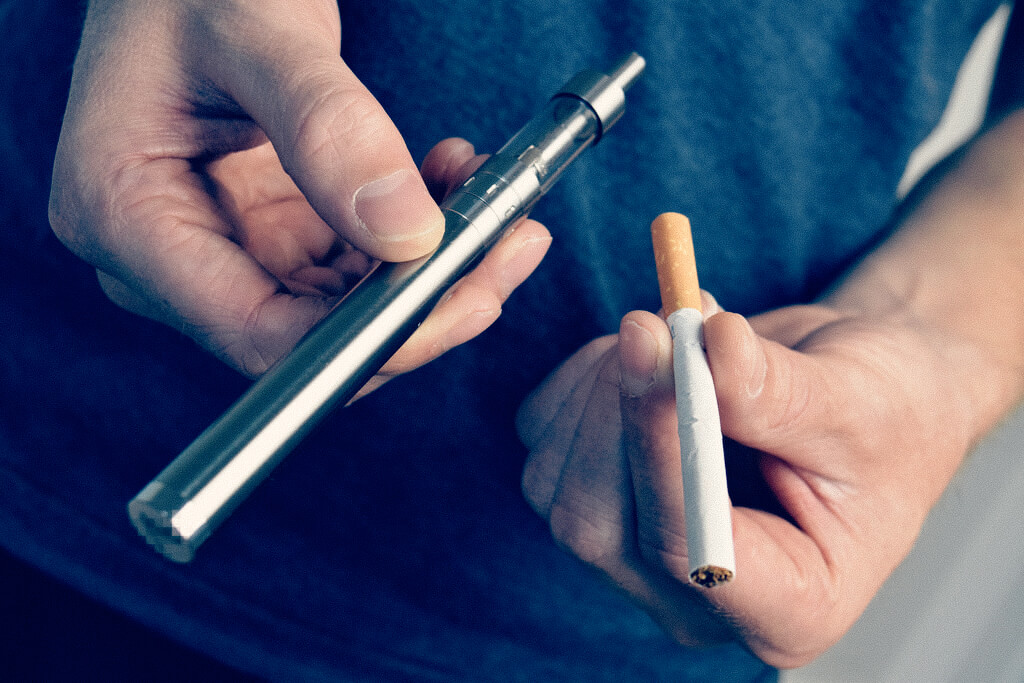
Though the idea for the e-cigarette was first documented in 1927, a working smokeless cigarette was first produced in 1963, but that wasn`t the start of the vaping revolution. The first commercially viable electronic cigarette was manufactured in China after being invented by pharmacist Hon Lik in 2003. Since then vaping has become more and more popular, but with its relatively short time on the market, research is just becoming available comparing the health impact of vaping as opposed to smoking. In addition to emerging science and research, there is much that we can assume, just based on our understanding of the chemicals in cigarettes and in vaping fluids and how those chemicals react in the body.
Smoking has become the health boogeyman in recent times with states and individuals winning large settlements from the tobacco industry for their concealment of the adverse side effects as well the fact they were putting additives into their products to increase users dependency upon cigarettes. This has made the public, health agencies, and government regulating bodies, very leery of any product that enters the cigarette market. Some have suggested even big tobacco has tried to create confusion about the safety of cigarettes and vaping devices, though many now have entered the e-cigarette market themselves.
In this article, we will try to demystify the issue and look at all of the data available on both cigarettes and vaping devices and provide you with the available facts to help you decide which product is safer and more appealing to you.